🌕 Where nervous system wisdom rewrites the menopause playbook—part of The Reckoning Years series.
When Oral Symptoms Appear Before Anything Else
Suddenly your mouth feels like a desert.
Dry. Sticky. Sometimes metallic.
Your gums recede despite meticulous hygiene.
Cavities appear between regular cleanings.
Breath changes.
The dentist shrugs: “That happens with age.”
It doesn’t.
And it isn’t about floss.
Why This Isn’t About Teeth — or Aging
What’s being labeled “menopausal mouth” isn’t decay.
It’s loss of regulation.
Midlife oral changes often show up before sleep collapses, before brain fog sets in, before fatigue becomes chronic. That’s not random. The mouth is one of the most electrically and neurologically sensitive tissues in the body.
When systemic regulation drops, it shows up here early.
Not as disease.
As signal.
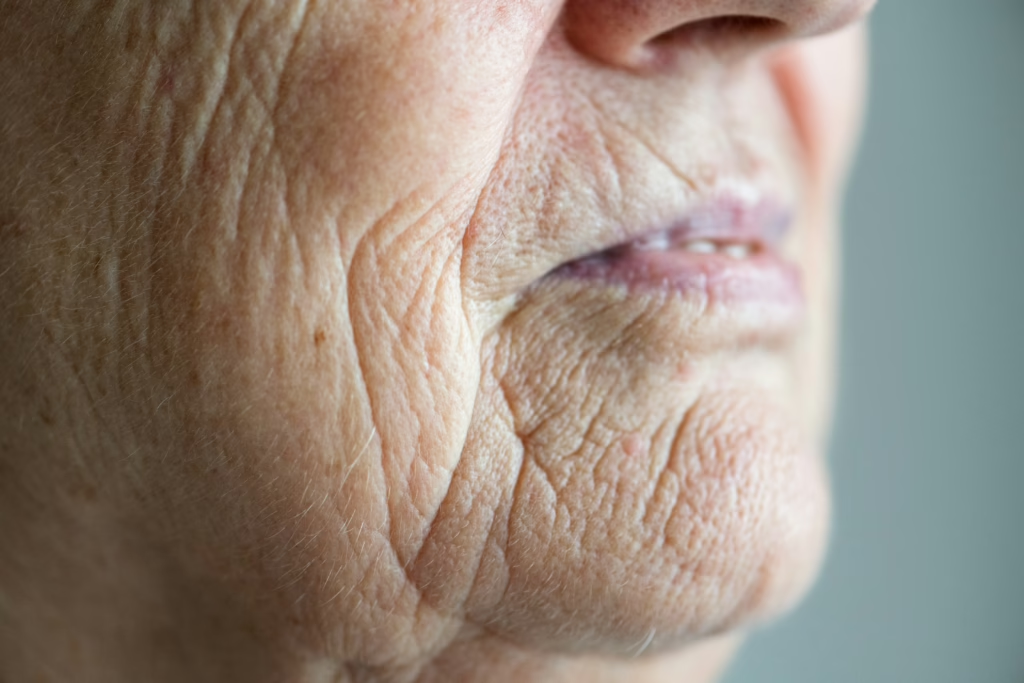
The Mouth as a Nervous-System Barometer
Estrogen withdrawal and declining autonomic tone collide in the oral terrain.
Estrogen supports salivary gland output and mucosal immune integrity. With its withdrawal, lubrication decreases and secretory immune defenses thin. At the same time, reduced vagal tone impairs microcirculation and lymphatic drainage through the jaw and face.
Saliva becomes sparse.
pH shifts.
Microbial order destabilizes.
Add chronic sympathetic load—jaw tension, clenching, shallow breathing—and enamel is stressed mechanically as well as biochemically.
This isn’t poor dental care.
It’s neural dehydration.
Saliva isn’t just moisture.
It’s an electrical medium.
When flow drops, the system is conserving capacity.
Salivary flow and oral immune integrity are regulated by estrogen signaling and autonomic (vagal) tone, both of which shift sharply during menopause.
A Note on Aligners, Breathing, and the Tongue
One modern factor deserves explicit mention: clear aligners.
For some women, aligners improve airway geometry.
For others, they subtly narrow the palate, alter tongue posture, and increase oral dryness and jaw tension.
Aligners move structure.
They don’t retrain function.
Without myofunctional support—tongue mobility, resting posture, nasal breathing—structural change can destabilize the oral terrain rather than support it. This is especially true in menopause, when connective tissues are less forgiving and neural regulation is already under strain.
If aligners are part of the picture, they’re best paired with tongue work and, in many cases, cranial or osteopathic support to help the system adapt rather than brace.
Dry mouth, disrupted sleep, and jaw pain are often downstream effects when that support is missing.
🌟 Through the VCC Lens: Supporting the Menopausal Mouth
🌱 Regulate
Dry mouth is often the first sign that parasympathetic tone has gone offline.
Before oral products or supplements, the signal needs to settle.
Nasal breathing, longer exhalations, and reducing jaw tension restore circulation to salivary tissue faster than any rinse.
🌀 Rewire
Once regulation improves, the mouth can relearn flow.
Electrolytes matter more than water; membrane support matters more than stimulation.
This is also where tongue posture and mobility come back online—especially important if aligners are in use.
🔥 Reclaim
Oral tissues respond to invitation, not force.
Gentle saliva stimulation, mineral support, and microbiome-respecting care rebuild local resilience.
Structural changes work best here when paired with functional retraining.
✨ Resonate
At this stage, oral care stops being cosmetic and becomes regulatory.
The mouth tracks nervous system tone in real time.
When flow stabilizes, sleep, cognition, and airway function often stabilize with it.
🪶 Micropractice: Change the Oral Signal
Once or twice a day, take two minutes to do the following:
- Breathe slowly through your nose with an emphasis on the exhale
- Let the tongue rest fully against the palate without force
- Gently mobilize the jaw side-to-side, then release
You’re not trying to “fix” the mouth.
You’re signaling safety.
Flow follows.
TL;DR
Dry mouth in menopause isn’t a dental failure.
It’s an early nervous-system and immune signal.
Treat the terrain, not the symptom.
Restore regulation, and the mouth often recovers before anything else.
Start with a Vital Signal Check →
This post lives in the Menopause Hub, where we decode oral changes, sleep disruption, neuroendocrine shifts, and sensory symptoms through the lens of nervous system capacity and terrain health.
You may also want to explore the Sleep Hub, where we unpack airway dynamics, nocturnal autonomic tone, and the nighttime physiology that shapes oral health, cognition, and long-term resilience →