🌕 Where nervous system wisdom rewrites the menopause playbook—part of The Reckoning Years series.
Why “Fat Burning” Is the Wrong Question
Most midlife women trying to “burn fat” can’t even absorb it properly.
Not because their gut is damaged.
Not because hormones are “off.”
And not because they lack discipline.
But because the very cells tasked with protection have quietly decided:
We’re not taking on more load.
This is not digestive failure.
It’s immune-mediated gatekeeping.
Fat absorption isn’t just a digestive act — it’s a permissioned process, governed by immune tone and nervous system signaling.
The Terrain Reality Most Advice Ignores
When a system has lived in high alert for years — caregiving, pressure, bracing, override — the immune system adapts by becoming selective.
Cell membranes stiffen.
Inflammatory signaling increases.
T-cells at the gut lining behave less like diplomats and more like bouncers.
What follows isn’t dramatic inflammation.
It’s restriction.
Lipid transport slows.
Chylomicron handling becomes inefficient.
Absorption becomes erratic.
Not because fat is dangerous —
but because the terrain feels unsafe for surplus energy.
This is how it shows up clinically:
- Eating adequately but remaining exhausted
- Bloating or heaviness after fat-containing meals
- Alternating constipation and loose stools
- “Puffy” weight gain despite low intake
- Labs that look fine while the body feels anything but
The system isn’t stubborn.
It’s protective.
The Gate Isn’t Broken. It’s Guarded.
But because the very cells tasked with protection have quietly decided:
We’re not taking on more load.
This is not digestive failure.
It’s immune-mediated gatekeeping.
Fat absorption isn’t a passive digestive act.
It’s a permissioned process—governed by immune tone and nervous system signaling.
When the system has lived in prolonged alert, immune cells don’t behave like open conduits.
They behave like bouncers.
Not because fat is “bad.”
Not because bile is deficient.
But because, under threat physiology, incoming energy is interpreted as additional burden, not fuel.
The gut doesn’t decide this alone.
The immune system participates.
And the nervous system sets the context.
Here’s what that gatekeeping looks like at the cellular interface:
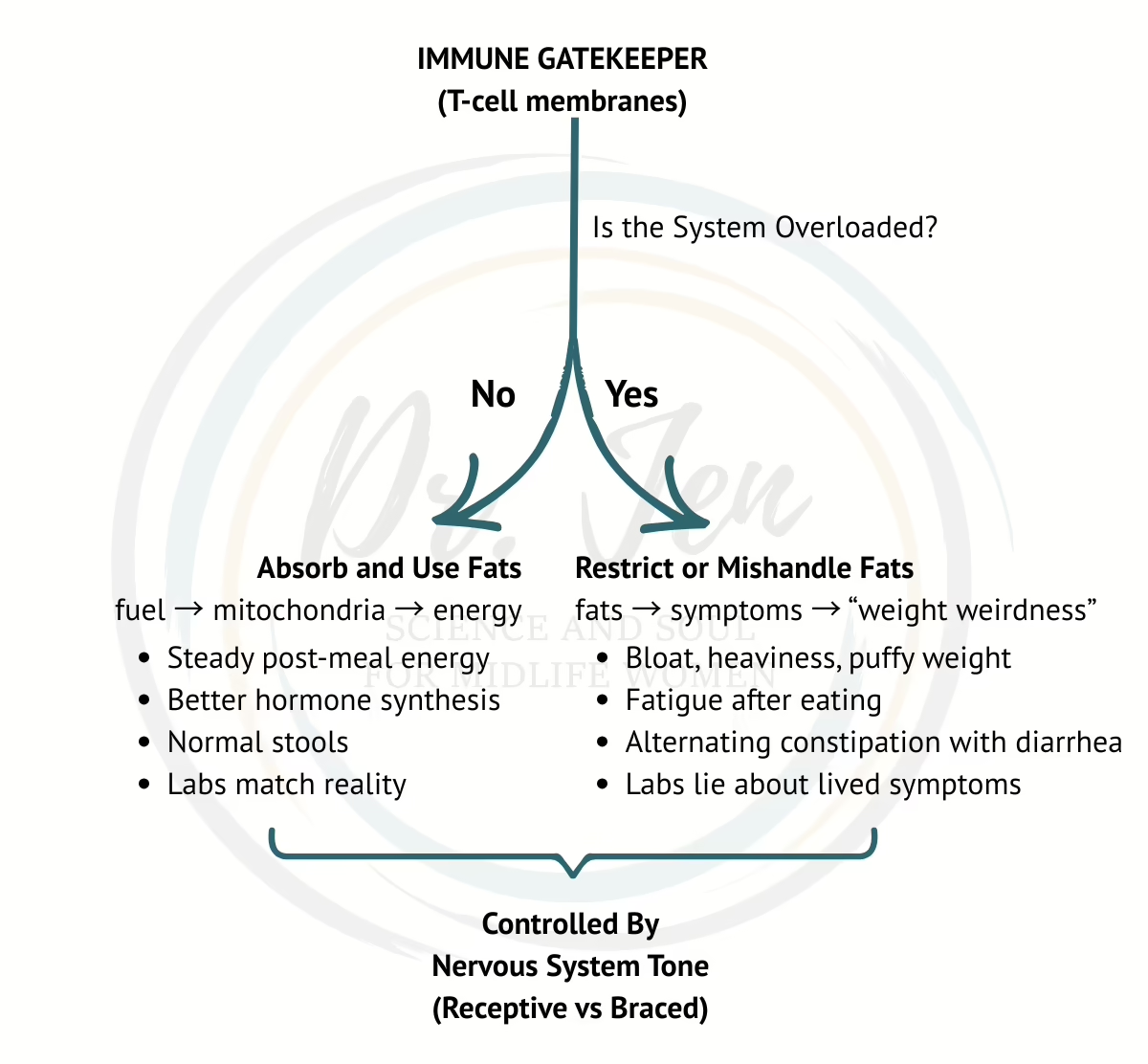
When nervous system threat tone remains elevated, immune signaling at the intestinal interface shifts from openness to containment. T-cell membrane dynamics act as regulatory gatekeepers—temporarily limiting fat uptake not as pathology, but as a protective load-management strategy.
© Dr. Jennifer Steinbachs, Syringa Wellness
Through the Vital Clarity Code Lens
🌱 Regulate
Lower the alarm. Membrane fluidity improves when sympathetic tone drops and minerals re-enter circulation.
🌀 Rewire
Re-establish communication between gut, immune cells, and nervous system. Timing matters more than force.
🔥 Reclaim
Absorb nutrients instead of fighting food. Fat becomes usable fuel again when permission returns.
✨ Resonate
Energy steadies. Weight responds secondarily. The system stops hoarding and starts flowing.
This isn’t fat loss.
It’s fat permission.
🪶 Micropractice: The Pre-Meal Permission Reset
Use this 8–12 minutes before your largest meal.
- 4–2–6 breathing × 10 cycles
(long exhale tells the immune system the threat has passed) - Parallel-line hip rockbacks × 10 each side
(reduces lower-body bracing; improves visceral signaling) - Slow trunk rotations for 30–60 seconds
(restores fascial and lymphatic communication) - Two exaggerated yawns or sighs
(drops sympathetic tone fast)
Then eat.
If post-meal heaviness, bloating, or fatigue shifts — even slightly —
you’ve confirmed the mechanism in real time.
This is not placebo.
It’s physiology responding to signal change.
TL;DR
You don’t have a fat-burning problem.
You have an immune system that doesn’t trust the load.
Change the signal → absorption improves.
Absorption improves → metabolism follows.
Nervous system first.
Then digestion.
Then weight.
Start with a Vital Signal Check →
This post lives in the Menopause Hub, where we decode absorption issues, immune mis-timing, inflammation, and metabolic disruption through the lens of nervous system capacity and terrain health.